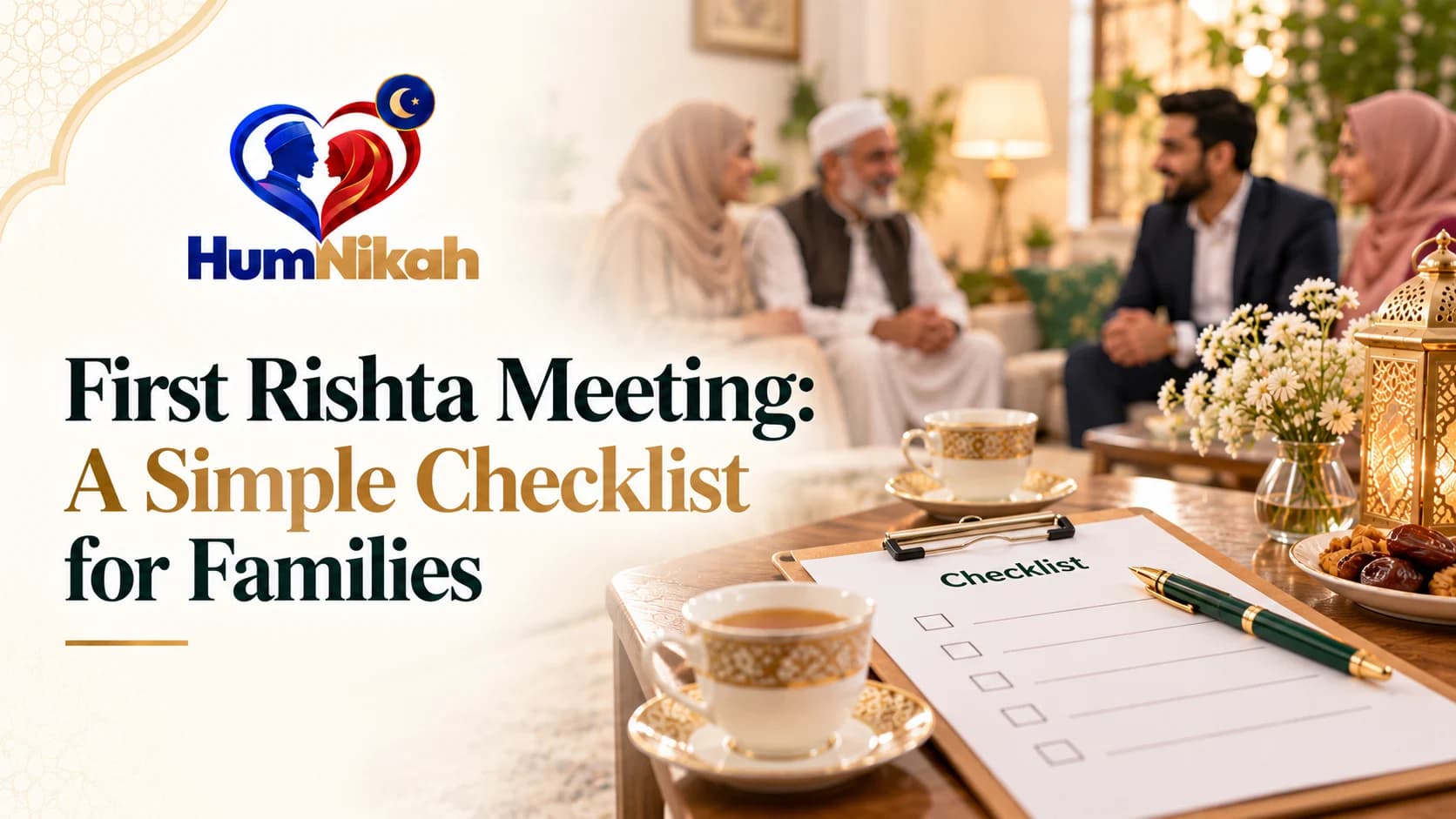
Short answer: A successful first rishta meeting focuses on warmth, mutual respect, active listening, and simple hospitality. Prepare the delegation thoughtfully, choose a comfortable venue, avoid aggressive questioning or pressure, and conclude with polite, timely communication. Submitting your biodata to HumNikah is free, and we help families arrange dignified introductions.
The first formal meeting between two families is a milestone in any marriage search. It is the moment where written biodatas, photographs, and phone conversations transition into real human interaction.
Naturally, family meetings can evoke both hope and anxiety. Parents want the best for their children, prospective partners hope for genuine rapport, and both sides wish to leave a favorable impression. When approached with emotional maturity, consideration, and clear etiquette, the first meeting can be a warm and reassuring experience for everyone involved.
This checklist provides a structured guide on how to prepare, conduct, and follow up on an initial rishta meeting gracefully. For key discussion points, explore our guide on questions to ask before a Muslim marriage.
Before the meeting
Careful preparation ensures that the meeting takes place smoothly and without awkward misunderstandings:
- Who comes: Keep the initial visiting delegation small and close-knit. Ideally, the prospective groom or bride should be accompanied by parents, the bride's Wali, or an elder sibling. Bringing large entourages of extended relatives to an initial meeting can overwhelm the hosts and create unnecessary pressure.
- Where to meet: The traditional and most comfortable venue is the bride's family home, where hospitality can be offered warmly and naturally. If travel distances or living arrangements make this difficult, a quiet, family-friendly private dining room or hotel lounge can serve as a neutral alternative.
- Set the timing clearly: Agree on a precise time and respect it. Arriving punctually demonstrates consideration for the other family's schedule. A typical first meeting should last between 60 and 90 minutes—long enough to get acquainted without becoming exhaustive.
- What to bring: If visiting the home, bringing a modest gift of fresh fruits, traditional sweets, or bakery delicacies is customary and appreciated as a gesture of goodwill.
- Bring copies of the biodata: Keep printed copies of your biodata and basic references handy in case elders wish to review them together.
During the meeting
The tone of the first meeting should be relaxed, friendly, and observant:
- Focus on warmth and listening: Begin with greetings, enquiries about family health, and light conversation about work or common hometown connections. Breaking the ice naturally helps ease nervous tension.
- Discuss lifestyle and values: Talk about family traditions, daily routines, educational interests, and general outlooks on life. Allow each side to share their story without interruption.
- Allow the prospective couple to interact: It is essential that the young man and woman have an opportunity to speak directly in a respectful, supervised environment—such as a designated corner of the living room within sight of family elders. This gives them a chance to gauge mutual comfort, conversational ease, and temperament.
- Keep hospitality simple: As hosts, serve simple, high-quality refreshments (tea, coffee, light snacks, or sweets). Avoid elaborate multi-course meals during an initial introductory visit, as excessive formalities can distract from meaningful conversation.
What not to do
Avoiding common social missteps preserves dignity and protects feelings on both sides:
- Do not conduct an interrogation: Avoid rapid-fire, aggressive questions about exact bank balances, ancestral property valuations, or intimate personal matters. Inquiries should be conversational and polite.
- Never make direct comparisons: Do not comment unfavorably on physical appearance, height, complexion, or culinary choices. Every individual and family deserves unconditional dignity.
- Avoid rushing an on-the-spot decision: Never demand an immediate answer before departing. Phrases like "Tell us yes or no right now" create awkward pressure. Both families need private time to reflect and consult elders.
- No unauthorized photography: Do not take photographs or record video during the meeting on mobile phones without explicit permission from both families.
After the meeting
How you conclude and follow up reflects your family's character and manners:
- Reflect privately as a family: Once the meeting concludes, sit down as a family and listen to the feelings of your son or daughter. Give their impressions primary weight, ensuring they feel comfortable and unpressured.
- Consult trusted elders: Review your impressions and, if appropriate, make customary community enquiries. Check our checklist to verify a Muslim rishta for guidance on confirming background facts.
- Communicate your response kindly: Whether your decision is positive or negative, communicate back within 48 to 72 hours through your marriage bureau coordinator or directly family-to-family.
- Delivering a polite decline: If you feel the match is not suitable, convey a brief, kind message: "We are grateful for your generous hospitality and the opportunity to meet your wonderful family. After prayer and family reflection, we feel this proposal may not be the right fit for our family. We sincerely wish your son/daughter every success and happiness."
A courteous decline leaves both families with mutual respect and closure.
At HumNikah, our team in Cox Town, Bangalore helps coordinate respectful family introductions across the city and country. Submitting your biodata to HumNikah is free, and we ensure the bride's Wali is involved at each step. Learn more on our Muslim marriage bureau in Bangalore page.
If you are ready to begin discovering suitable proposals, Submit your biodata (free) or Chat on WhatsApp with our team today.
FAQs
How long should an initial rishta meeting last?
An initial meeting usually lasts between 60 and 90 minutes. This provides ample time for greetings, light refreshments, and meaningful conversation without feeling rushed or overly prolonged.
Who should attend the first rishta meeting?
The prospective bride or groom, their parents, the bride's Wali, and perhaps an elder sibling or close uncle. Avoid bringing large gatherings of distant relatives to a preliminary meeting.
Can the prospective bride and groom speak privately during the meeting?
Yes. It is customary and recommended that the prospective couple have a private conversation within eyesight of family elders, allowing them to discuss career goals, personal expectations, and daily values respectfully.
How soon should we give our response after a meeting?
A respectful timeframe is within two to three days (48 to 72 hours). This gives both families time to consult quietly without keeping the other side waiting anxiously.
How does HumNikah assist with first family meetings?
HumNikah acts as a neutral, professional coordinator. We ensure documents are screened in advance, align expectations between families beforehand, and facilitate introductions with the bride's Wali involved from the start.
HumNikah Editorial Team
Nikah & family guidance
Providing authentic Islamic guidance for single Muslims, parents, and newlyweds embarking on Nikah.